博文

The effect of tundish exchangeable nozzle mechanism
图片
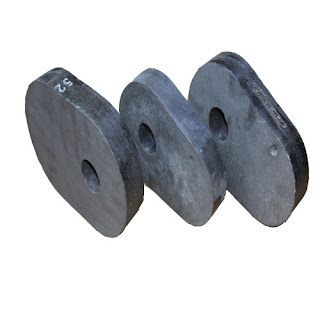
  The structure of tundish quick change nozzle device is simple, which is divided into four parts: base, fixed plate, sector plate and spring pressure flow regulator. The enclosed height is only 110mm. There are two sliding plates in the fan-shaped sliding plate frame. Moving the handle of the fan-shaped sliding plate frame can make the casting hole of one of the sliding plates in the fan-shaped sliding plate frame work. When the other slide brick has moved to the other side of the device, the removed slide brick can be replaced. The device increases the thickness of the slide brick, which can be used as a quick change nozzle device, and the immersion nozzle is installed at the bottom of the slide brick, which can replace the plug rod for protective pouring. The advantages of tundish exchangeable nozzle: 1. Improved casting operator safety 2. Enables longer casting sequences 3. Improved metallurgical quality 4. Flexibility For further details, please feel free t...

The advantages and characteristic of tundish dry vibration mix

图片
  Dry vibration mix is an unshaped refractory material that is vibrated and molded without adding water or liquid binder. Under the action of vibration, the material can form a dense and uniform whole, which can be strengthened by thermosetting bonding agent or ceramic sintering agent when heated. Dry vibration mix is composed of aggregate and powder、binding agent and additive. Dry vibration mix ' s character is : this kind of material is easy to flow under the action of vibration force, and the powder can fill the tiny pores between particle accumulation even under the action of very small vibration force, and obtain a dense body with higher filling density. What's more, it is heated to form a working layer with certain strength. However, there is still a part of unsintered surface showing the original dense accumulation structure. This structure helps to reduce the stress caused by expansion or contraction; Prevent the spread and extension of cracks; Prevent ...

What is quartz sand used for

图片
  Quartz sand is the quartz writing processing of silica particles (Also called silica, quartz, quartz rock), is a texture hard, wear-resisting, stable chemical properties of silicate minerals. In nature exist in quartz sandstone, quartzite and vein quartz. Quartz sandstone is consolidation of clastic rocks, quartz particles are contented above 95%, and is derived from a variety of magmatic rocks, sedimentary rocks and metamorphic rocks, heavy minerals is less, associated minerals have feldspar, mica and clay minerals.   Quartz sand have several kinds of classical. Admiral quartz have higher fireproof performance, industrial quartz sand is often divided into: ordinary quartz sand, fine quartz sand, high purity quartz sand, fused quartz and silicon powder, etc.   Quartz sand have important role in glass, refractory and metallurgy. Quartz sand have unique physical and chemical properties, make it in aviation, aerospace, electronic, mechanical, and today a ...

The function and advantages of tap hole clay

图片
  Tap hole clay is used to seal the taphole refractory , at present there are water stemming and can be divided into two types: anhydrous tap hole clay, the former is used in low pressure, strengthening smelting degree is not high, the small blast furnace, the latter in high top pressure, high degree of intensification of smelting of large and medium blast furnace. Tap hole clay can be divided into two parts - refractory aggregate and binder. Refractory aggregate means corundum, mullite, flint clay and other refractory raw material and modified materials such as coke, mica. Binder for water or organic material such as tar pitch and phenolic resin, also adding SiC Si3N4, expansive agent and additive, etc. Aggregate in a certain size and weight matrix, under the harmonic of binder has certain plasticity, thus can through the mud gun hitting iron mouth to block the molten iron. With water as a bond is called the water stemming, tar, organic material such ...

Refractories for matte reverberatory furnace

图片
The bottom of the matte reverberatory furnace is mainly affected by the chemical erosion and thermal stress of the molten copper matte and molten slag. Sometimes the joints of the refractory bricks are too large, the masonry is not good, and the matte penetrates into the furnace bottom, which will cause the furnace bottom bricks to float and damage. Multi-layer structure composite furnace bottom is generally used: refractory fiber felt , lightweight refractory bricks , and magnesia bricks are laid on the steel shell and slab surface in sequence. The working lining is generally sintered with magnesia sintered integral furnace bottom or quartz sand sintered furnace bottom (less Used), and has a reverse arch structure. Copper reverberatory furnaces are generally equipped with an electric front bed (electric heating and heat preservation), and are generally built with magnesia bricks or magnesia chrome bricks. Wanhao is a manufacturer who is specialized in designing various kin...

The damage process of magnesia carbon brick

图片
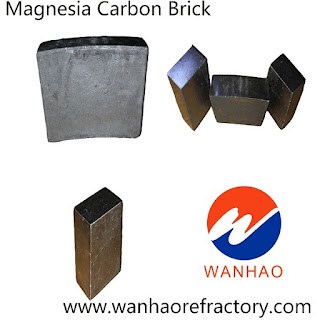
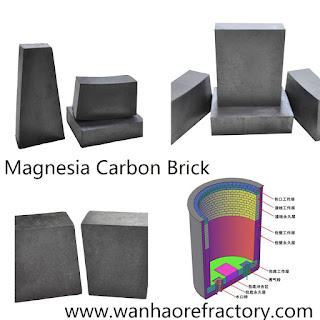
  The damage process of magnesia carbon brick : the damage of magnesia carbon brick is firstly due to the oxidation of carbon in the brick to form a decarburized layer, plus the difference in thermal expansion rate between magnesium oxide and graphite at high temperatures (1.4% and 0.% at 1000 ℃, respectively) ), Leading to loose structure, reduced strength, and then eroded by slag, mechanical erosion, etc., the magnesium oxide particles in the brick are gradually eroded, falling off layer by layer, causing damage to the magnesium carbon brick. The damage process of magnesia carbon brick is: oxidation → decarburization → looseness → erosion → erosion → shedding → damage. The damage of the magnesia carbon brick is firstly the oxidation of the carbon in the hot surface of the working lining to form a thin decarburized layer. The oxidation of the carbon is due to the continuous oxidation of iron oxides in the slag and O? in the air and oxides such as CO?, SiO...

The development of carbon containing refractories

图片
  carbon containing refractories, carbon containing refractories, carbon-containing refractory castables The carbon content of refractories is higher than that of refractories. The higher the carbon content in refractories is, the poorer the use of carburizing for molten steel, and the poorer the crisis. It is worth noting that in some carbon containing refractories, except for free carbon, the carbon in refractories can be directly dissolved into molten steel, It may also contain SiC as the main component or additive, which may lead to urgent carburizing use. Carbon-containing refractory bricks are used extensively in the steel industry worldwide, carbon-containing refractory bricks are oxidized under high temperature conditions. In addition to the work on carbon containing refractory bricks , much effort has been, and is being, made worldwide towards the development of carbon-containing refractory castables . Wanhao is a manufacturer who is specialized in design...